Concord, N.H. (March 30, 2026) -The Community College System of New Hampshire (CCSNH) is committed to providing high-quality education that connects students to meaningful careers while supporting the State’s workforce needs. With more than $6.7 million in year-one funding from the Centers for Medicare & Medicaid Services’ Rural Health Transformation (RHT) program—and up to $37.7 million over five years—CCSNH is advancing the Governor’s GO-NORTH initiative through a statewide Healthcare Career Guidance Hub (HCGH) Initiative.
Key components of the HCGH Initiative include:
- Establishing four regional hubs focused on healthcare and human services careers, integrating efforts across CCSNH’s seven colleges
- Leveraging existing strong healthcare programs, employer and educational partnerships, and flexible learning formats
- Defining and building clear career pathways from high school to hire
- Building on a proven apprenticeship model to engage employers and define regional workforce needs
- Providing students with career guidance, training pathways, certifications, pre-apprenticeship and apprenticeship opportunities, and job placement support
“CCSNH is excited about the opportunity the Rural Health Transformation grant brings to NH. This initiative represents exactly the kind of coordinated, forward-thinking approach we need to address New Hampshire’s healthcare workforce challenges. Too often, individuals interested in healthcare careers face unclear pathways or barriers to entry, while employers struggle to find qualified talent. The Healthcare Career Guidance Hub Initiative brings these pieces together—aligning education, training, supports for students, and employer needs in a way that creates real opportunity,” said Kristine Dudley, CCSNH Director of Workforce Development. “By expanding access to short-term credentials, increasing capacity in academic programs, strengthening apprenticeship models, and building clearer pathways from high school to employment, CCSNH is not only preparing more individuals for in-demand healthcare roles, but also helping ensure our rural communities have the skilled workforce they need to thrive.”
The HCGH initiative addresses key workforce challenges, including limited awareness of diverse healthcare roles, unclear career pathways for entry-level workers, and mismatches between student demand and program capacity in high-interest fields. Through coordinated employer and student engagement, the hubs will expand career awareness, improve matching talent with jobs, and create clearer, more flexible pathways into healthcare careers — helping retain talent and reduce workforce shortages.
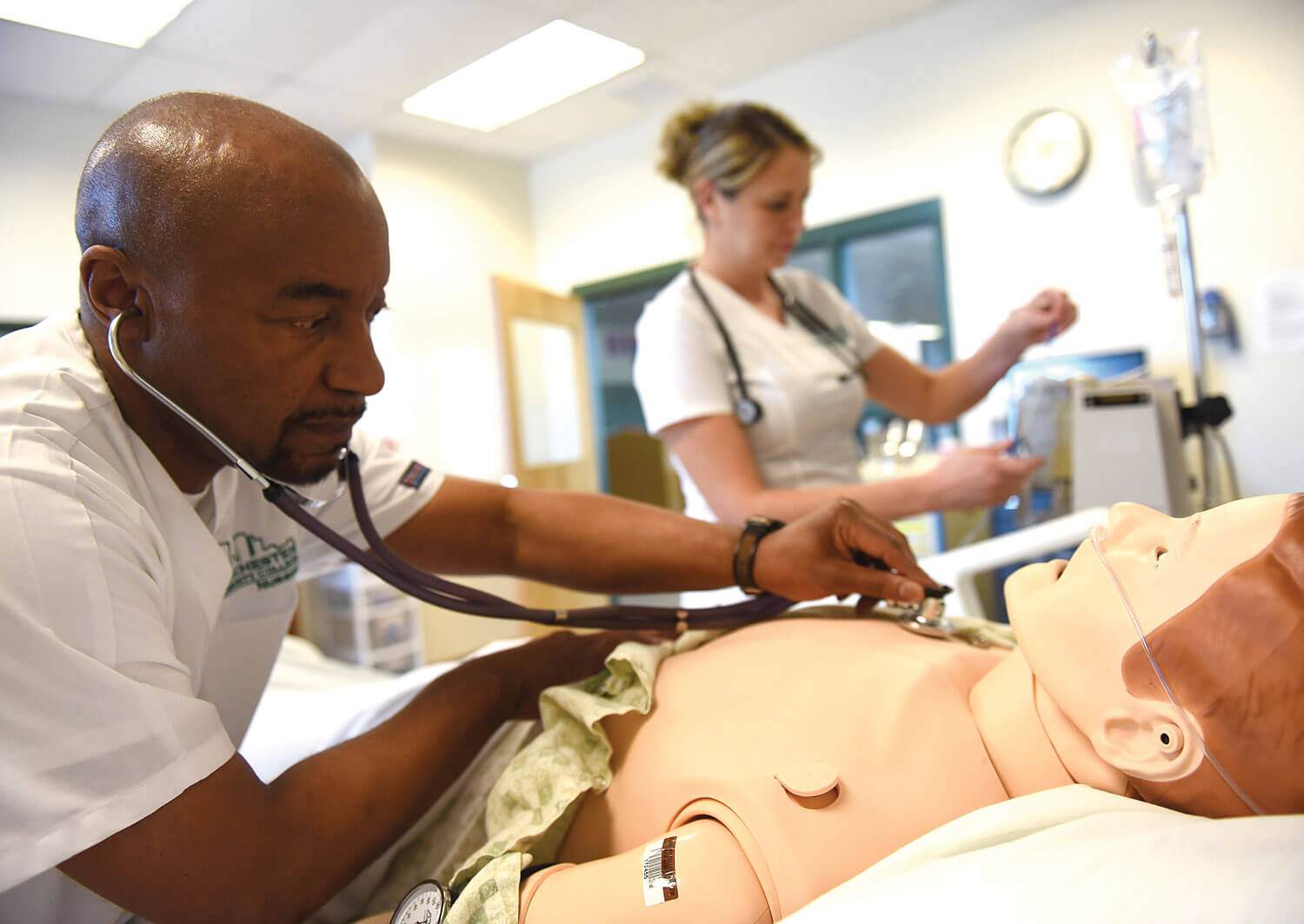
Training will include both degree and short-term credential programs, many delivered through a new Paraprofessional Academy, in partnership with The University of New Hampshire’s mobile simulation units to bring critical training to rural areas. Over five years, CCSNH aims to double annual credential attainment to serve more than 1,200 students and expand capacity in high-demand fields such as Nursing, Allied Dental Health, and Paramedic Medicine. Under the direction of GO-NORTH and in collaboration with career and technical educational centers, healthcare providers, GO-NORTH partners, and state agencies, CCSNH will strengthen career pathways and increase the number of qualified healthcare professionals serving communities across New Hampshire.
This project is supported by the Centers for Medicare & Medicaid Services (CMS) of the U.S. Department of Health and Human Services (HHS) as part of a financial assistance award totaling $6,730,219 with 100% funded by CMS/HHS. The contents are those of the author(s) and do not necessarily represent the official views of, nor an endorsement, by CMS/HHS, or the U.S. government.